
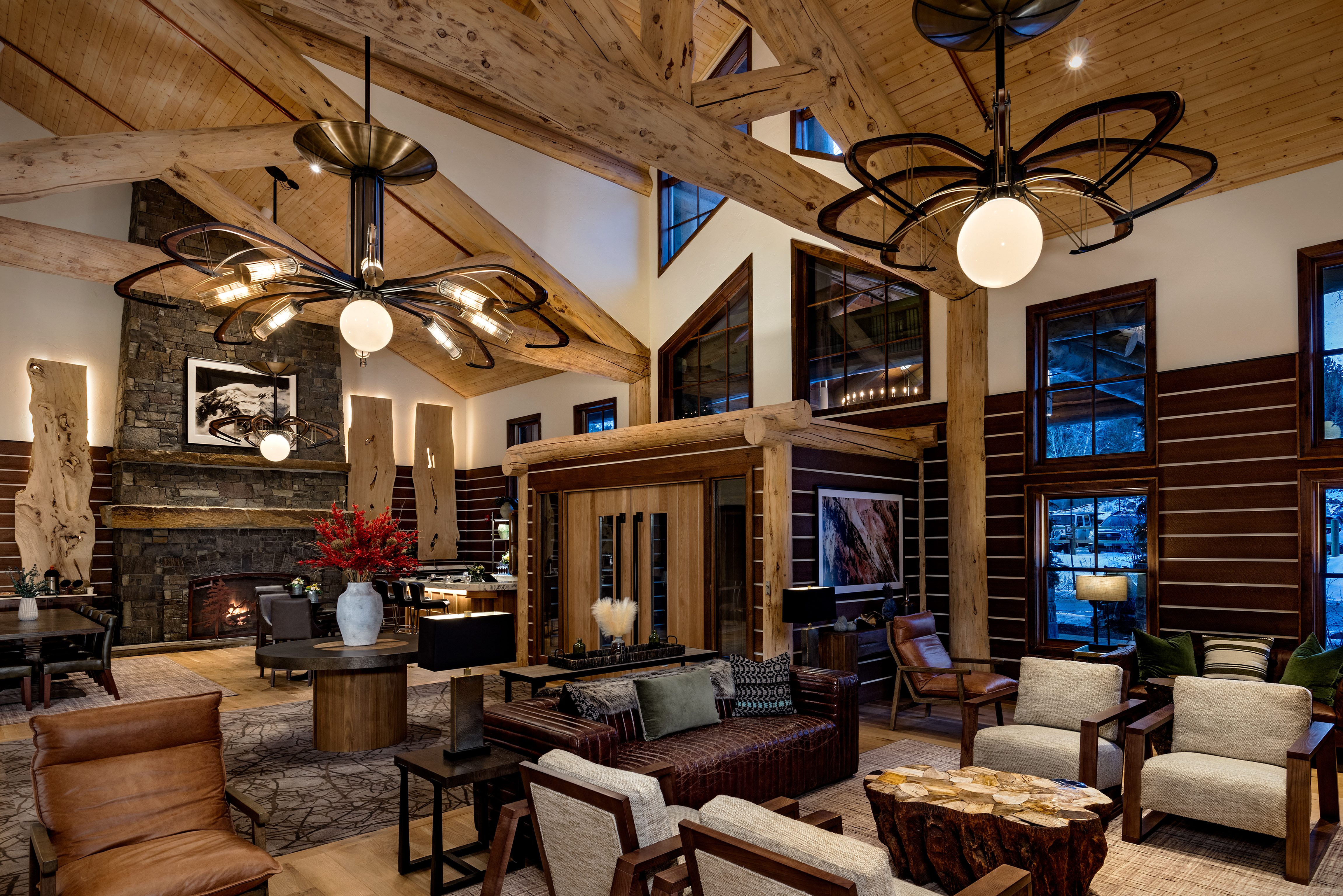
Teton Mountain Lodge
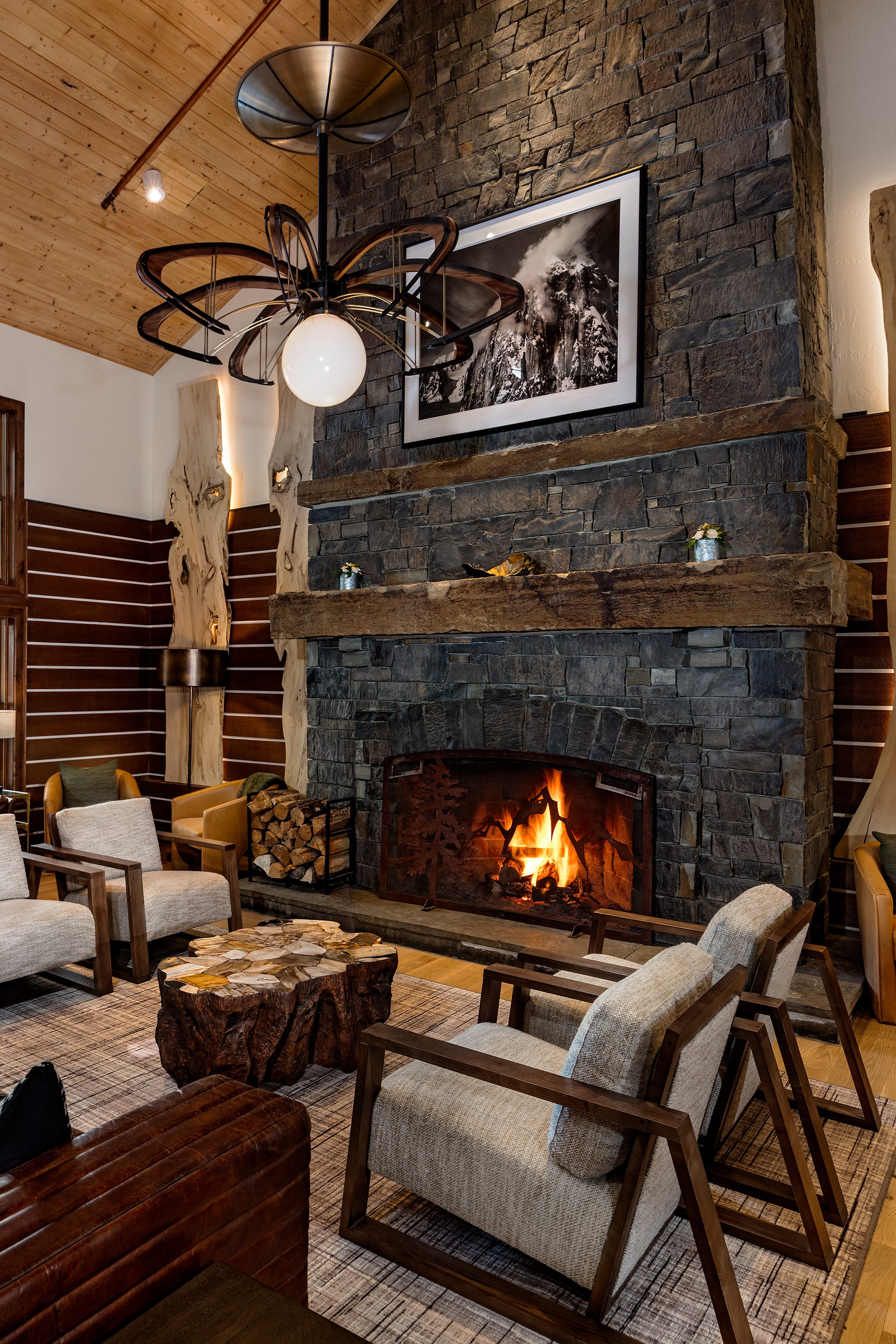
Man and machine —in conversation with Donut Shopʼs Lead Fabricator, Michael Randazzo.
Is there a set practice or kind of approach that you generally take when you’re digesting a project of this scale for the first time?
Well, the first thing is to look at the drawings and try to understand the individual components of it. Without that, it’s hard to understand the scale. Next is to break it down into how those components intersect the other pieces —understanding all of that before jumping into fabrication is helpful.
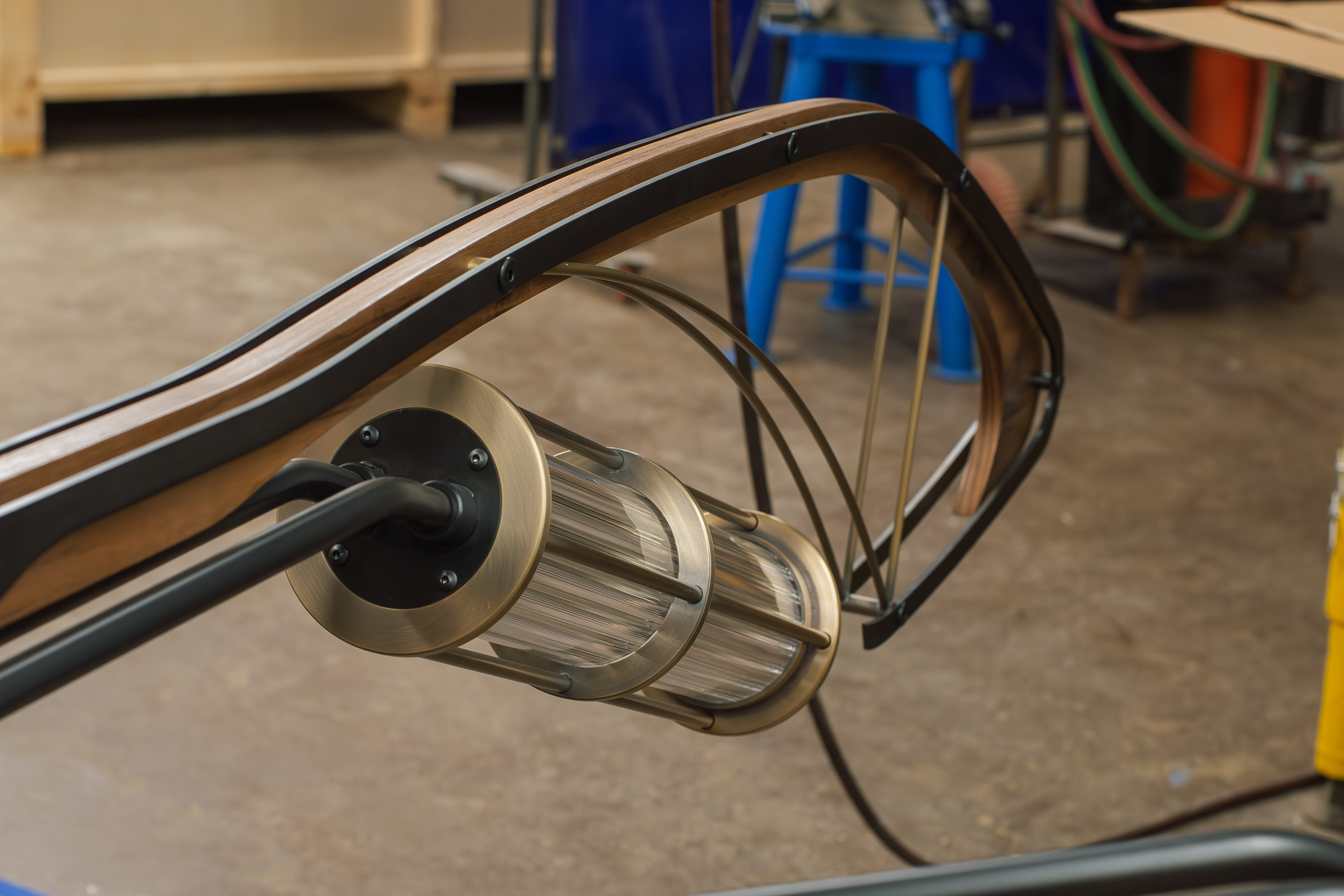
But this one had a lot of laser cut components. So we had a combination of extremely accurate laser cut parts and completely handmade pieces. Using the laser cut pieces as fixtures, I was able to hand build the parts that couldn’t be computer cut
For example, it was critical how the curved brass pieces that were silver soldered together fit with other components. I worked off of a plotted drawing and made sure that it fit, then made a jig to repeat that piece,
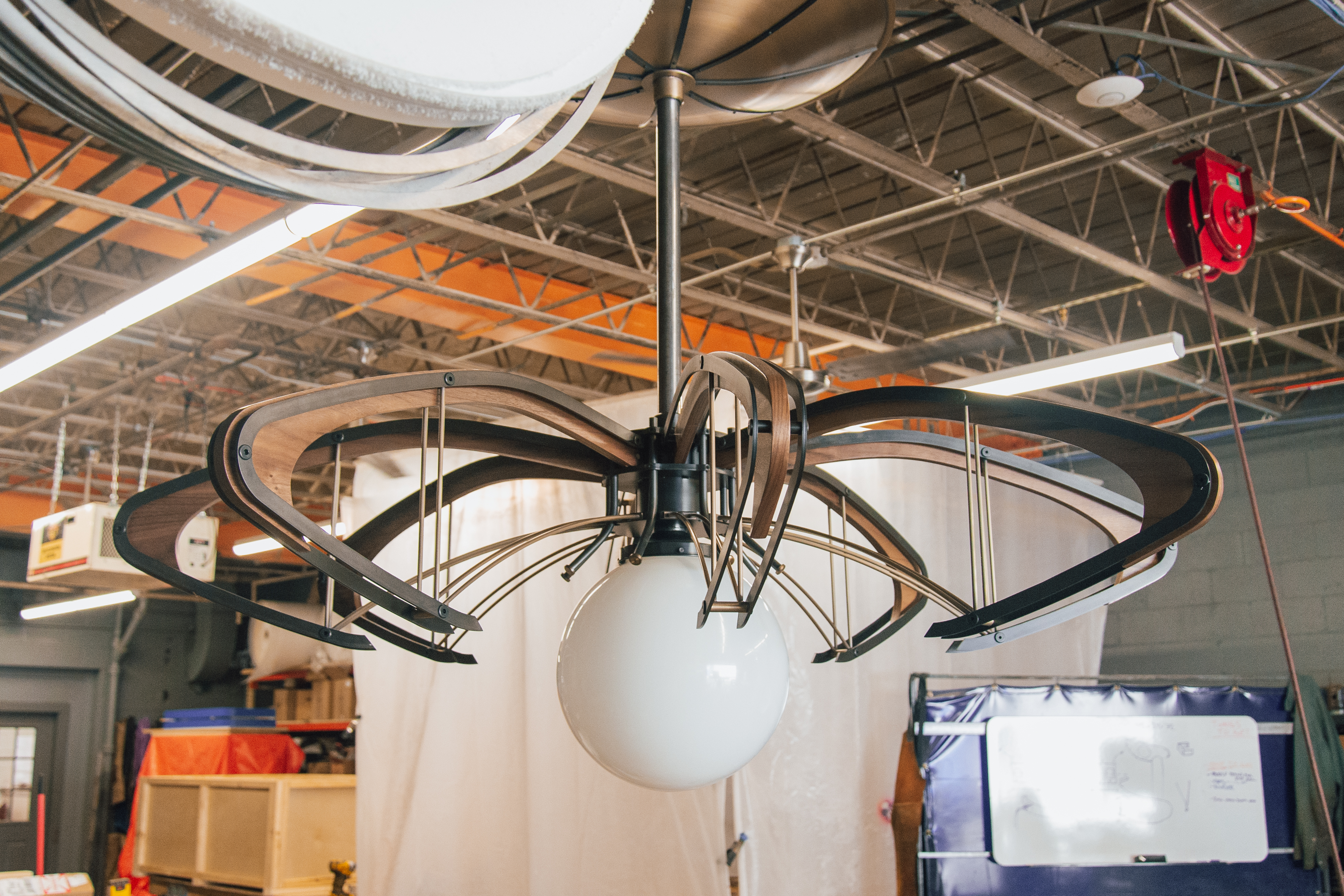
So for something that’s handmade, its important to understand what’s actually critical in terms of fitting the whole fixture together. For example, if the radius of that rolled portion wasn’t dimensionally perfect but it still hit the three points where it connected, then, the imperfections don’t really matter?

Yeah, there’s definitely areas where you can loosen up a little bit and work quicker that don’t have any visual impact or functional impact if some‐ thing’s a 16th or 32nd off. it’s not going to detract visually or mess up an assembly.
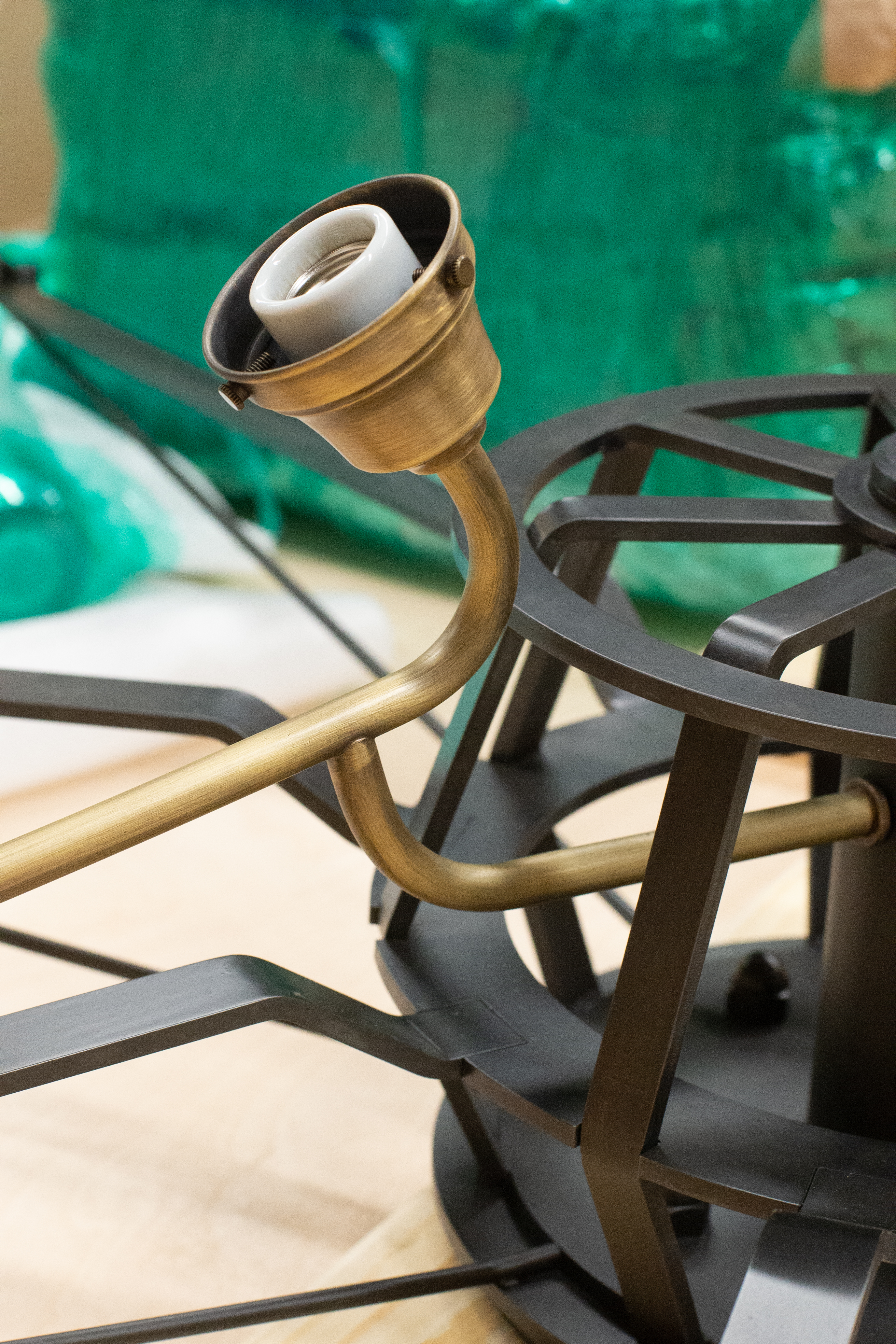
In some ways, it’s kind of seen as a negative these days, with the precision and accessibility of computer cut components. But when you compare a part that was completely handmade next to a digitally fabricated piece, the handmade piece has more life to it than the computer stuff, because it has subtle variations in it.
I feel that even if there are computer cut parts that are involved in the over‐ all assembly, as long as there’s some parts that can be handmade, it softens the whole look of it. And I feel like that does that with this chandelier too, and gives it a bit more life.

Due to the sheer size of this piece, it had to be fabricated in many pieces and sections, which then had to be assembled on site by a separate team. How do you ensure that parts will fit together when they get on site?
Well, especially with handmade pieces, we talked about the variations that might happen in constructing it. It’s always good to stamp the parts to ensure that those go back where they were when they were assembled in the shop. This is avoidable if things are made with a very high degree of accuracy, but when things are handmade, it’s always good to stamp them so they go back the same way.
In your experience, when does it make sense to contract something out versus produce in house?
Well, always when you don’t have the proper machinery to make something. In fabrication, you can improvise a lot, but if the outcome isn’t right, the part doesn’t look right, or the quality isn’t there, then obviously you have to source it out. And things like CNC laser cutting machines. There aren’t too many people that have those in-house. In the case of the shop we use, all they do is cut sheet metal. So there’s a difference between sheet metal shops and other fabrication shops, usually they don’t have all of the equipment under one roof. In our case, we don’t, so we need to source it out.


How would you distinguish what Donut Shop does from this laser cutting shop?
It would be in the flexibility that we have to create different products and designs in a much larger variety of materials. These big shops rely on a lot of automation, therefore they don’t make their money hand building anything. Our strength lies in custom, and one-off pieces.